45x
Fewer AI tokens to get grounded account answers
Discover How Our Customers Are Thriving with FunnelStory!
45x
Fewer AI tokens to get grounded account answers
11K+
Customer accounts unified into one Customer Intelligence Graph
80%
Cut in manual CS busywork across both workspaces
500K+
Conversations reconciled into a single model
Why these agents are reliable
Most AI agents reconstruct the customer at runtime and guess. FunnelStory's agents don't. They run on accrued wisdom — a governed, compounding understanding of every account, computed once in the Customer Intelligence Graph — so every decision starts from verified truth.

Usage, revenue, support, conversations, meetings, & more - structured & unstructured.
Predictions, needle movers - computed, point-in-time analytics.
The governed understanding of each account that informs every decision.

Reason over something governed and true — instead of guessing at runtime.
Validated, not asserted.
The predictions feeding your agents are trained and backtested against your own churned and retained accounts — measured on recall, not a generic formula. No hallucinated risk scores.
Three types of AI agents
Start with the agents FunnelStory ships, point them at the outcomes you care about, and build your own for everything else.
Set a goal, such as retention, expansion or onboarding. The agent finds the accounts that can reach it, recommends the next best action for each, and measures every day which accounts are moving.
Out of the box. They catch the moments that move an account, investigate each one against your data and product docs, draft the next step as an Action Card, and close the ones that resolve on their own.
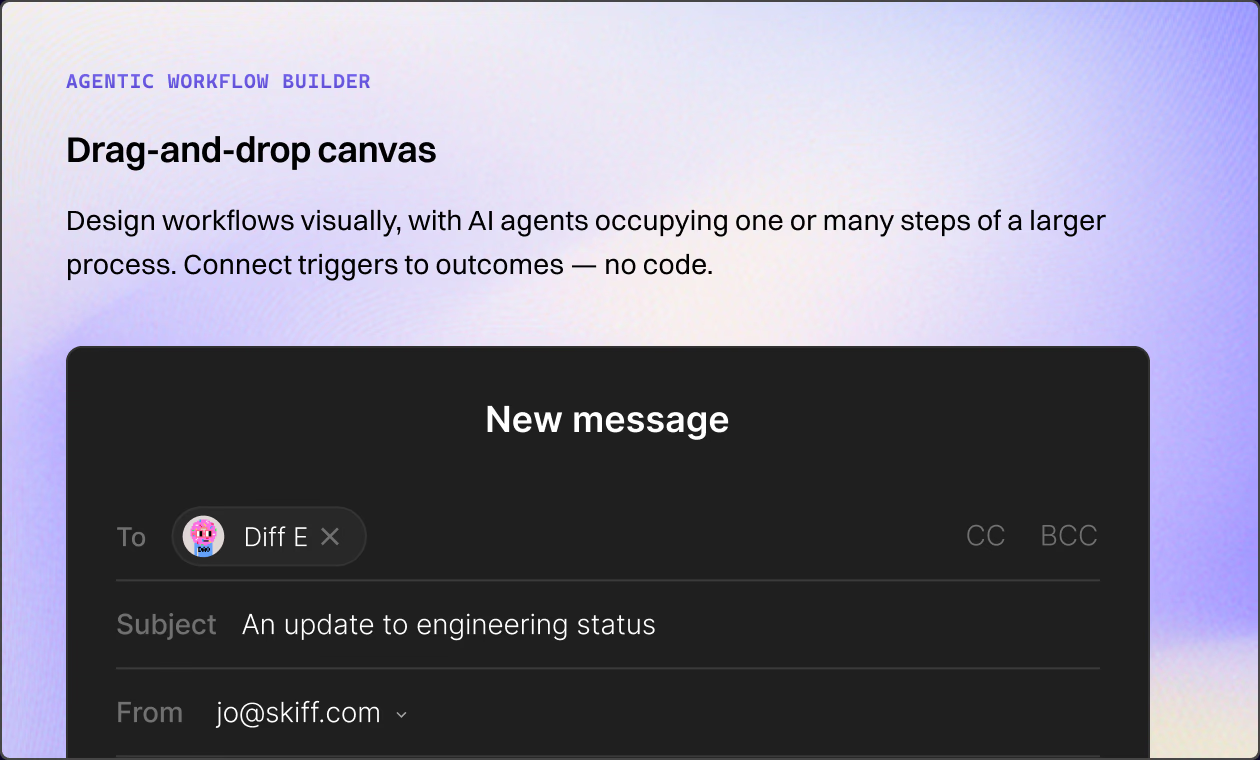
Describe your use case in plain language from your AI copilot, or build it on the visual canvas. FunnelStory writes the agent, you test it on a real account, and deploy.
Outcome-based agents
Every FunnelStory agent is built around an outcome — retention, expansion, adoption — not a chat prompt. You choose how much autonomy it gets.
CS Assist mode
Human-in-the-loopYour CSM asks, from a needle mover or the Investigate panel on any Action Card; the agent reasons over the account's wisdom to investigate and triage — what's happening, why, and what to do — with the evidence attached. Ask it to rewrite the next steps or the draft, and it changes only what you asked for. A copilot for the judgment calls.
Example
"Why did Acme's health drop?" → the agent pulls stakeholders, recent conversations, and needle movers, and answers: champion went quiet + a pricing concern 30 days pre-renewal.
Direct Action mode
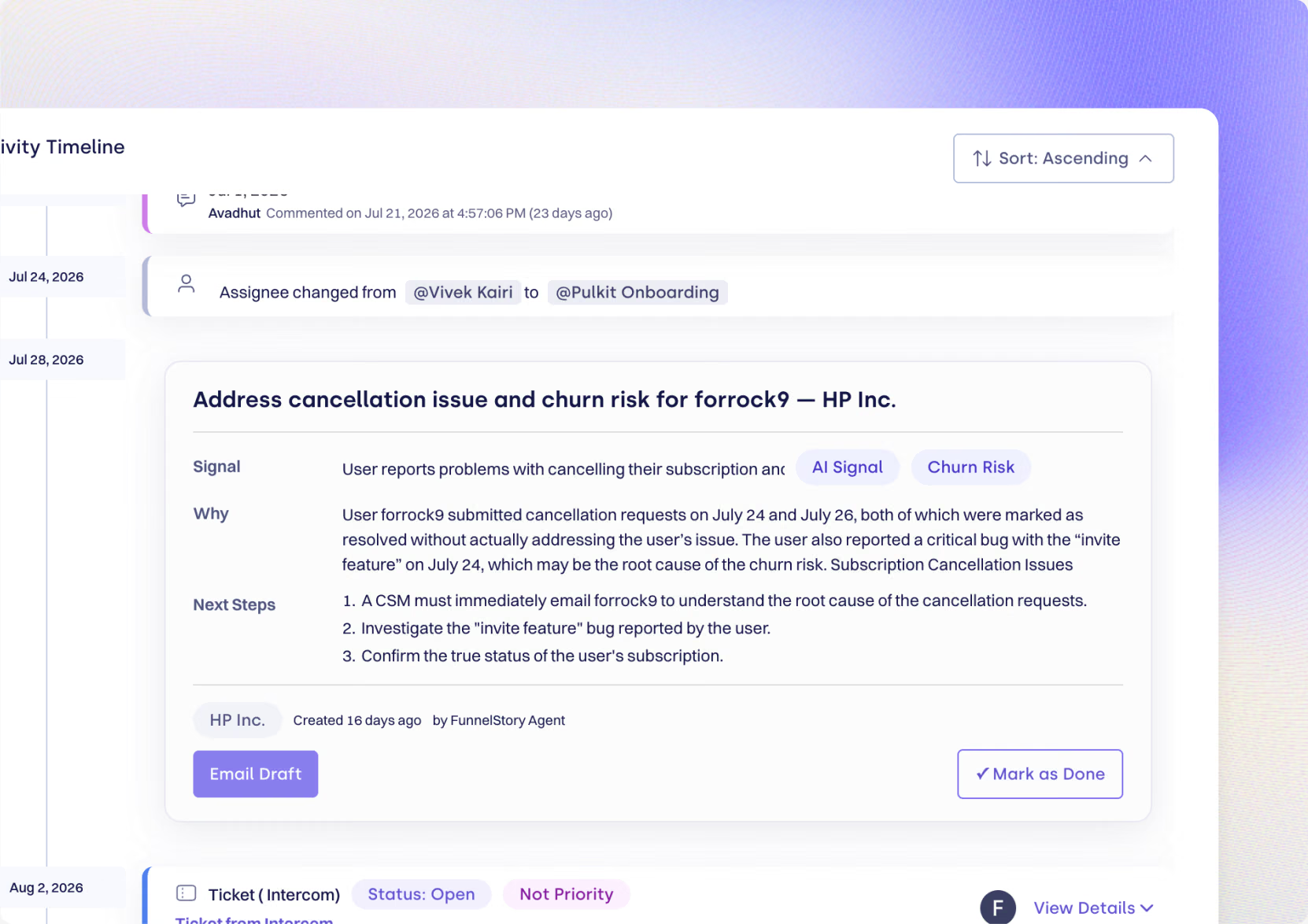
Agent-suggestedThe agent runs the full Detect → Investigate → Act loop on its own and surfaces a ready-to-review Action Card: the recommended play, the evidence behind it, and outreach drafted - assigned to the right CSM.
Example
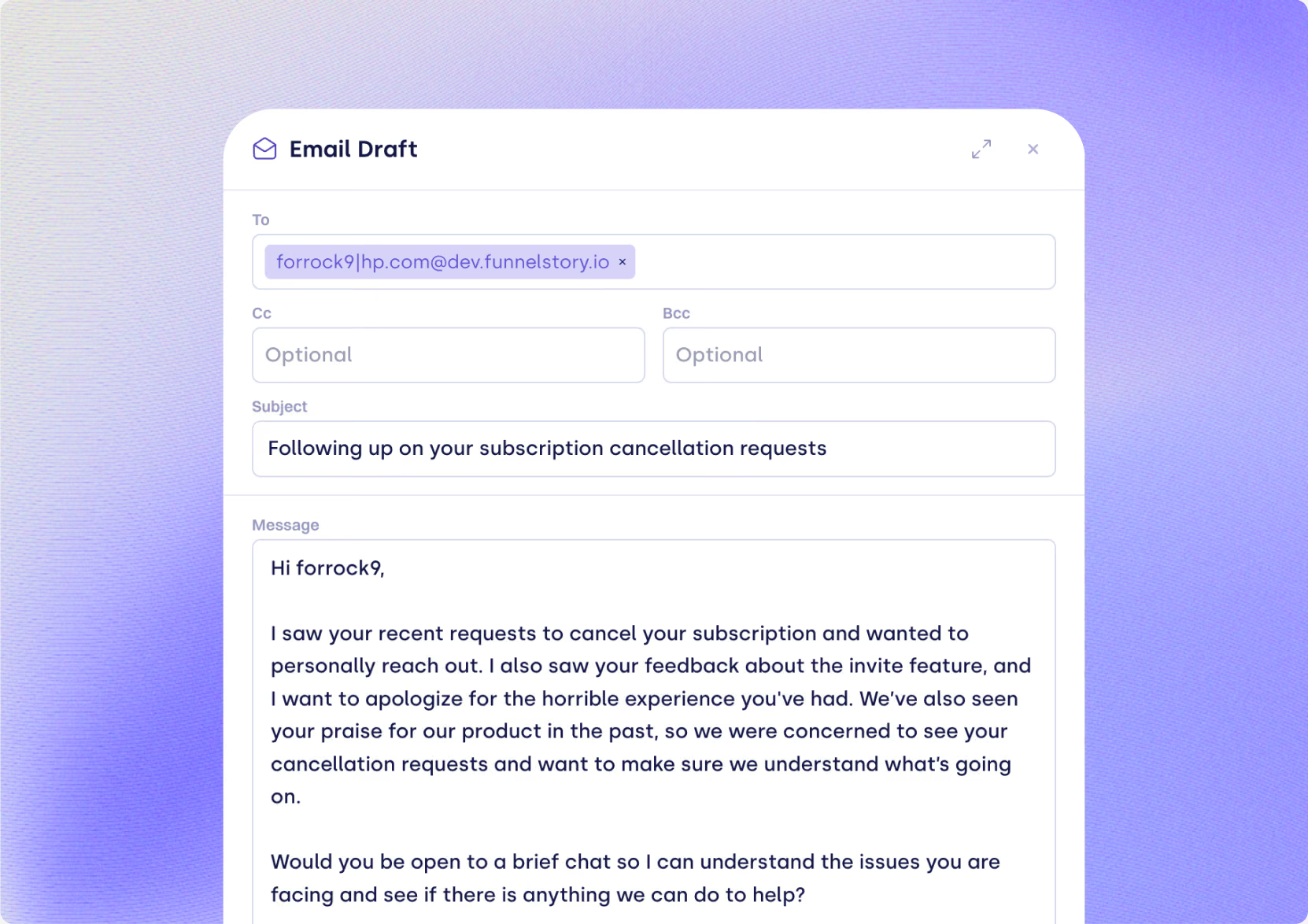
Overnight, an agent detects a renewal risk, investigates it, and by morning the CSM has a card with the play, the why, and an email ready to send.
Customer Action mode
AutonomousThe agent takes the work to the customer itself: it sends the outreach, shares the right guide from your docs, follows up, and updates your CRM and tasks as it goes. You set the guardrails - which accounts, which actions, and when a person steps in.
Example
An account's admin stops using a key feature after onboarding → the agent emails a how-to from your docs, checks usage a week later, follows up, and logs every step in Salesforce, with no CSM time spent.
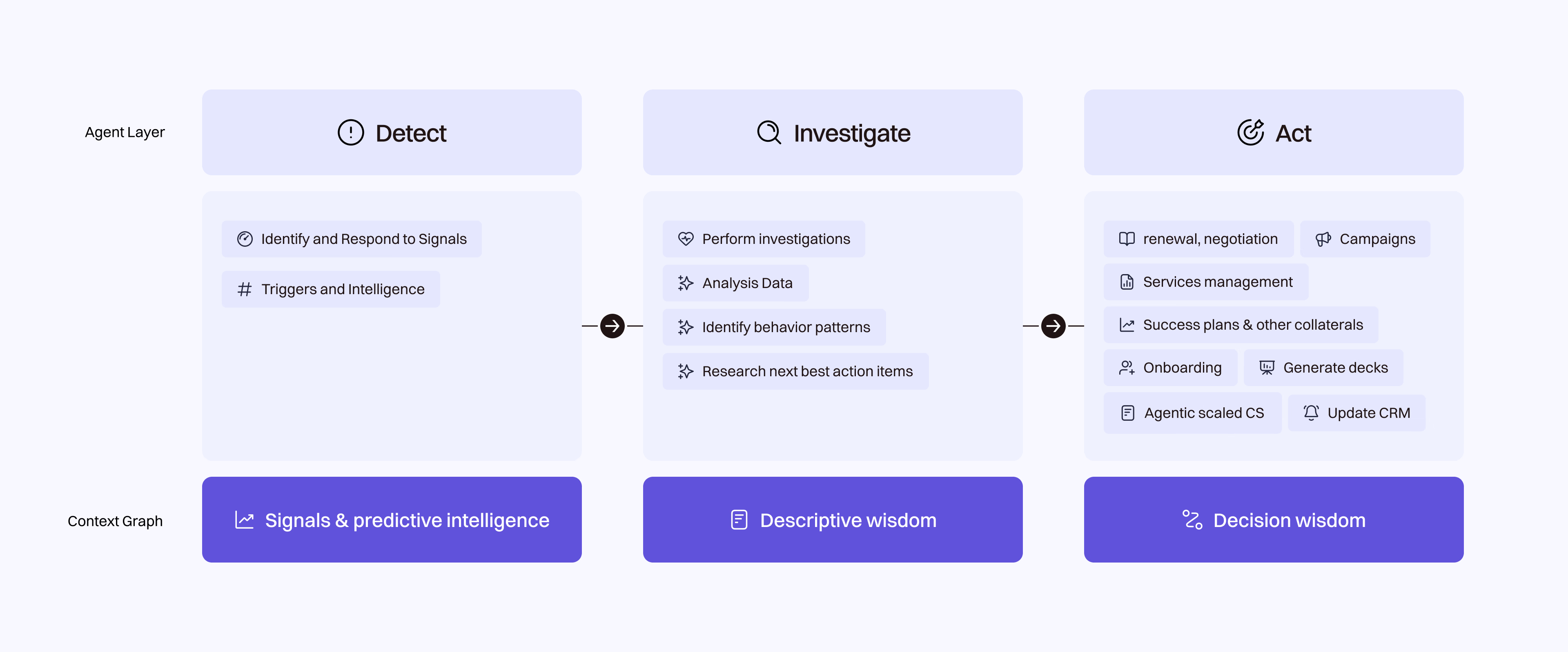
Detect → Investigate → Act
Great customer success is a loop: catch the signal, understand it, act on it. The Customer Intelligence Graph makes your agents strong at all three — because each stage draws on a different layer of wisdom.
Grounded in your product docs
A generic model guesses how your product works. FunnelStory agents read your documentation first, so a recommended next step names the right feature and setting, and shows where it came from.
Bring in your docs
Point FunnelStory at your public docs site, upload PDFs and guides, or map docs in from your warehouse.
Agents read them
Needle mover investigations, Outcome Agents, the agents you build and AI copilots over MCP all search the same docs.
Every step cites its source
Recommendations use your product's own names for features and settings, and link to the page they came from, so CSMs can check before they act.
Action Card · Acme
Next stepWalk Acme's admin through scheduled theme investigations, so new risks are caught without a manual review.
Source
Needle Movers settings · docs.funnelstory.ai
Intelligence that takes action
The same infrastructure runs both — trigger-based workflows for immediate execution, and persistent agents that watch your accounts around the clock.
Agentic workflows
Trigger-based, multi-step
A defined process that fires on a signal and runs to completion — the workhorse for routine, repeatable operations.
Example
For every account with a renewal in the next three months, generate a health report, log it to the CRM, and notify the assigned rep.
Long-running agents
Persistent, background
An agent that continuously monitors your environment and acts when conditions are met — no trigger required.
Example
Continuously watch the graph for critical needle movers; act, and interact back-and-forth with the team or customer until the issue is resolved.
What agents can do
Once an agent knows what to do, it can do it — in the systems your team already uses, with an approval step wherever you want one.
Work in your CRM
Read, create and update Salesforce and HubSpot records, link contacts and enroll them in HubSpot sequences.
Reach people
Send email from your inbox or domain, and post or reply in Slack.
Read your files
Read Google Drive docs, sheets and PDFs, and files shared in Slack.
Create deliverables
Produce PDFs and PowerPoint decks from a template, filled with the account's own data.
Research
Search the web, and enrich contacts and companies with firmographics.
Organize the work
Create tasks and projects, assigned to the right person with a due date.
Keep data in sync
Save results as your own datasets, and write them back to BigQuery.
Reach anything else
Call any API, or run custom code when a step needs logic of its own.
AI agents for services and delivery
Professional services and delivery teams run on the same context graph, with agents built for how projects are staffed, delivered and billed.
Matches skills to projects, checks availability, and supports reallocations, extensions and backfills.
Turns statements of work into plans, and keeps updates and delivery records current.
Watches customer conversations and delivery activity for emerging problems, requests and opportunities.
Maps, transforms and validates customer data.
Keeps requirements, solution designs, statements of work, implementation and migration plans, and handoff documents up to date.
Flags missing time, unbilled hours and budget overruns, and answers questions about margins and performance.
And many more.

Build your way
Deploying an agent shouldn't need an engineering queue. Choose the path that fits how you work — both run natively on FunnelStory infrastructure. Vibe code an agent from Claude, ChatGPT, Gemini or any similar AI platform.
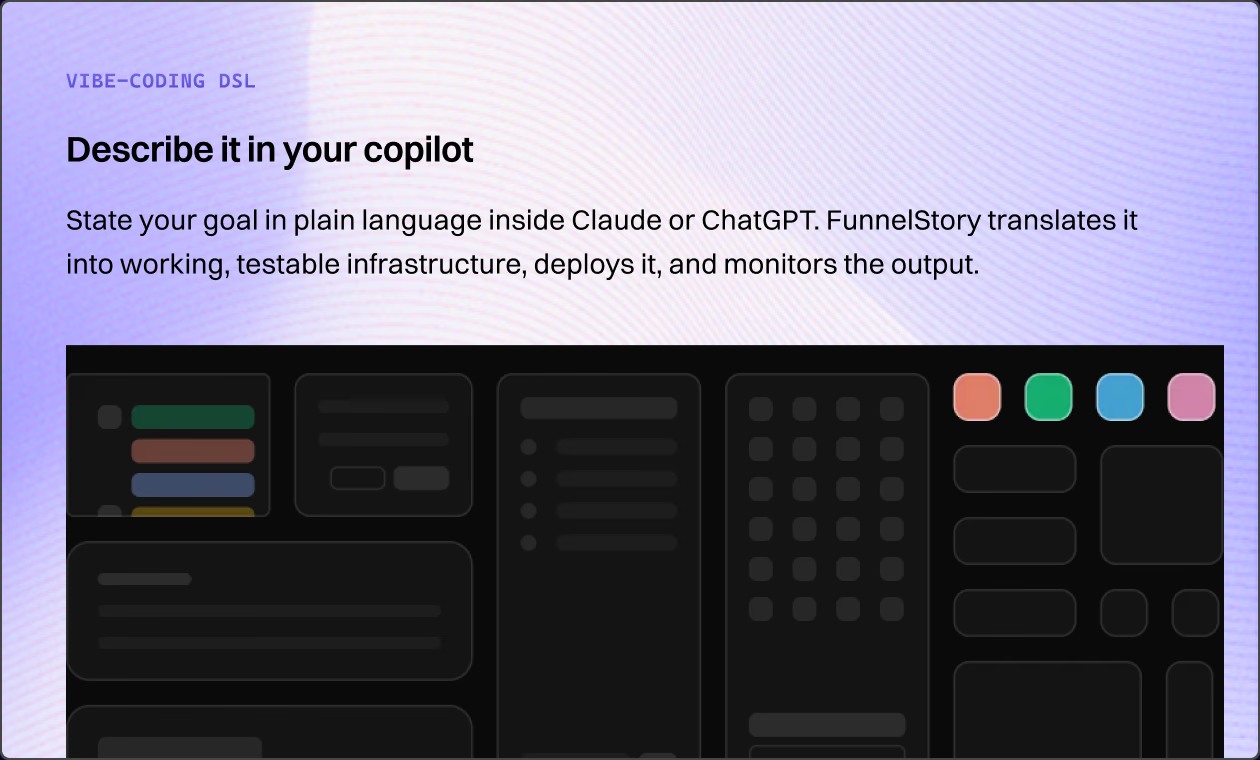
Deploy faster
Tap an open-source ecosystem of ready-made agents, or bring your own orchestration.
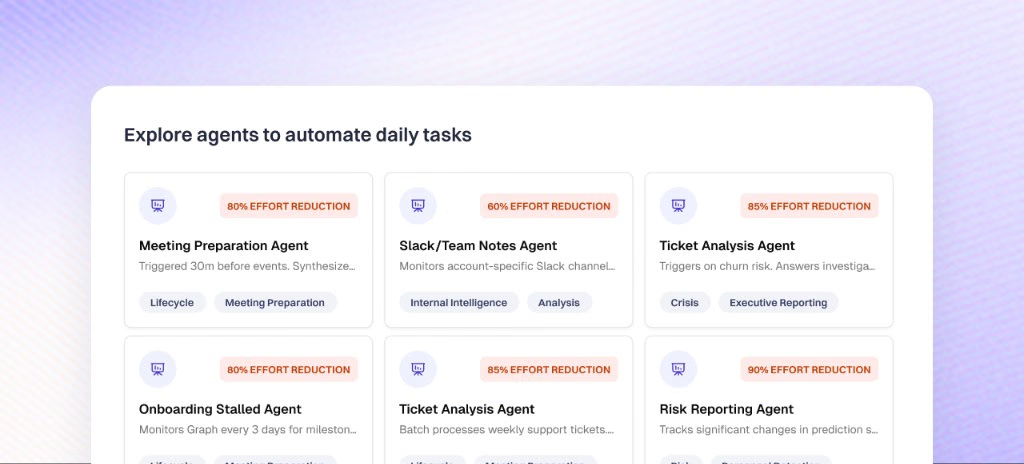
Open-source Skills library
20 skills come pre-loaded, from account briefs and meeting prep to churn and renewal reports, QBR decks, value emails and case studies. They live in a public repository, so you can reuse and adapt what works across your org.
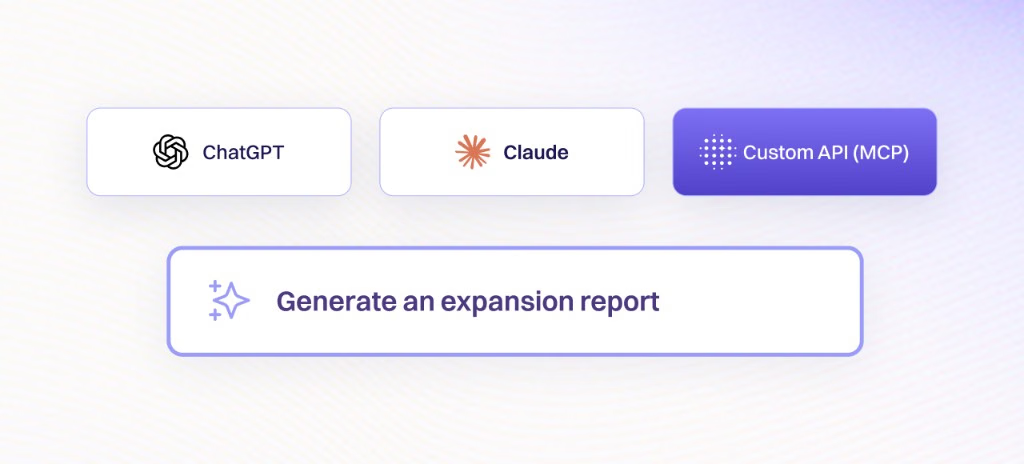
Bring your own orchestration
Run agents on FunnelStory's own harness, or orchestrate them from Claude, ChatGPT, Gemini or your own framework.
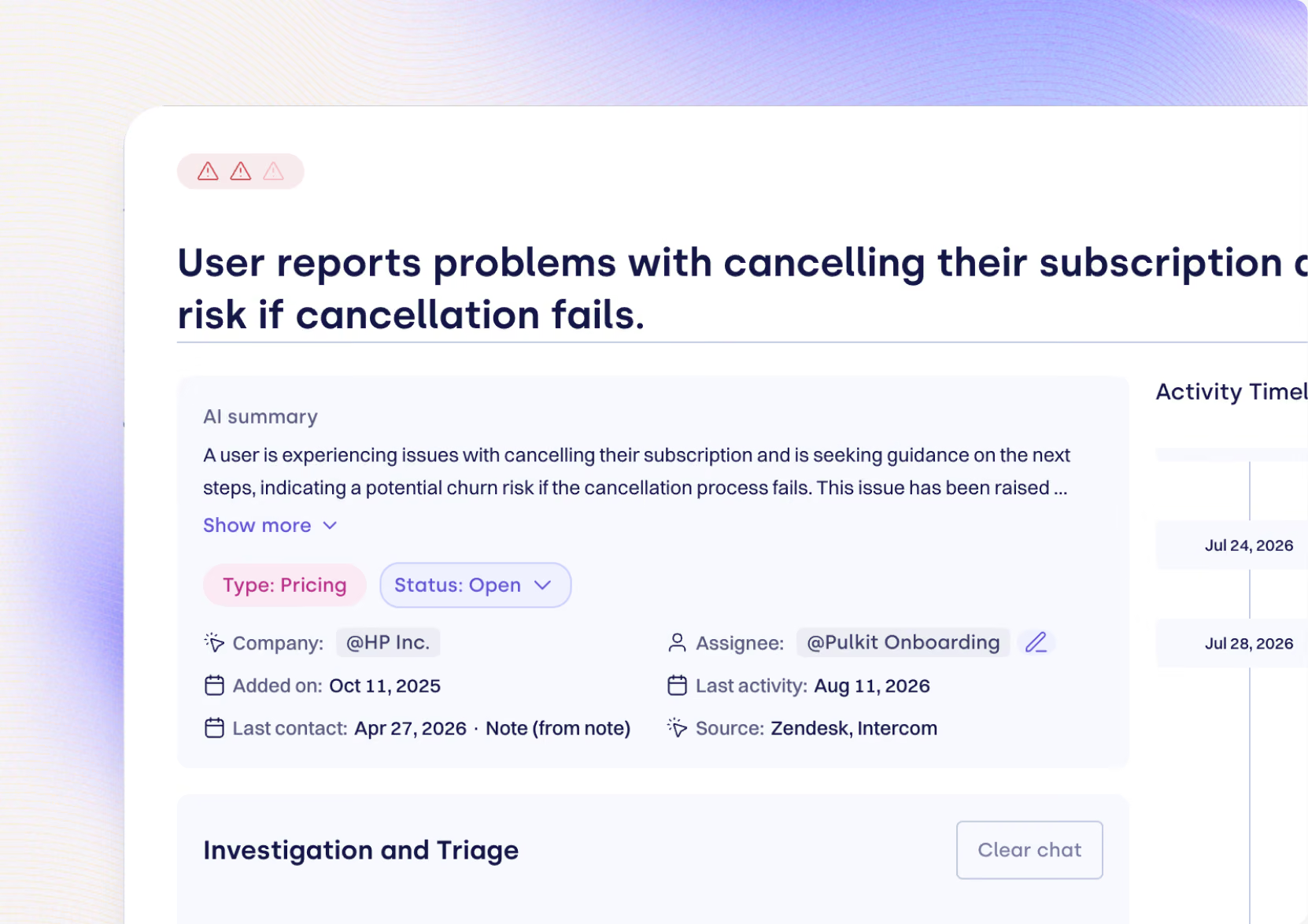
Auto mode, in action
The Detect → Investigate → Act loop, run by an agent while your team sleeps:
A needle mover fires — a pricing risk on a renewing account.
Enterprise-grade
Reliable agents need reliable intelligence — and reliable controls. Both are built in.
Every signal an agent acts on is trained and backtested against your own churned and retained accounts — measured on recall, so agents act on facts.
Run fully autonomously, or set human-in-the-loop approval gates before an agent executes a critical action.
Role-based access sits over every agent — each sees and does only what its human role allows.
Our Unified Journey and needle-mover methods are patent-pending technology.